-
-
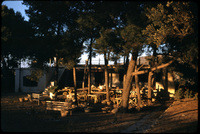
A series of tables are set outside a taverna used as an excavation headquarters just outside of Knossos. One person sorting pottery is pictured.
-
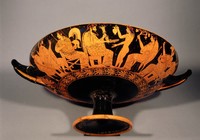
Kylix with Gods in Olympus (Athena, Zeus, Ganymede, Hestia) designed by Oltos.
-
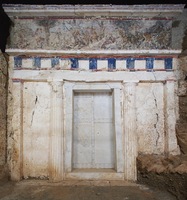
Facade and fresco from Tomb II (of Philip II?)
-
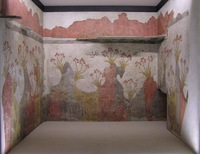
The bottom section is a rocky landscape with an irregular series of outcroppings. Dark lines suggest striations in the rock, but the color is more artificially applied, with irregular bands of blue, red, and yellow
painted vertically on the rocks. Clinging to the rocks are lilies that sway and bend in different directions. In the air are several flying swallows, painted with strokes of dark paint on the light wall and a dab of red for the head. The curving lines have a calligraphic quality, making the looping tails and uneven wings convincing naturalistic representations of birds turning and twisting in three dimensions as they fly. Called the Spring Fresco, it has been pointed out that the birds’ behavior belongs to a later season in the year as the adult birds feed their offspring in mid-flight. (Stansbury-O'Donell A History of Greek Art p. 40)
-
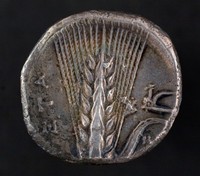
Silver Stater of Metapontum with grain
-
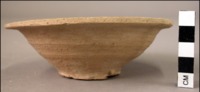
A piece of pottery from the Middle Minoan period, excavated in Crete.
-
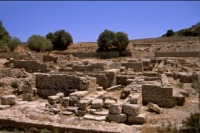
Kommos situated in its surrounding environment with natural flora.
-
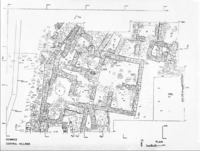
Rendering of the excavation of Kommos on the Central Hillside.
-
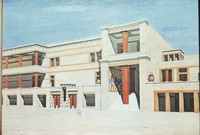
This is a reconstruction drawing of the state apartments at the palace of Knossos.
-
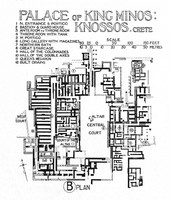
This is the plan of Knossos from 1921, 16 years after Arthur Evans concluded his excavations.
-
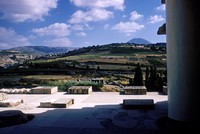
Neopalatial Palace at Knossos on the Island of Crete within the Knossos archeological site.
-
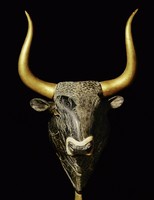
This is a rhyton in the shape of a bull with gold horns and a black face.
-
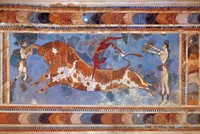
This is an images of the Bull leaping fresco at the palace of Knossos
-
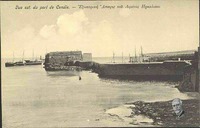
This is a postcard with an exterior view of the Old Port of Heraklion.
-
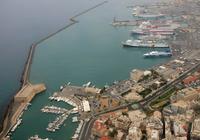
This is an aerial view of both of the Old and New Ports of Heraklion in one singular image.
-
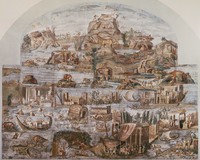
Animals at the nile river on rocks, large mosaic.
-
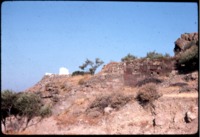
The fortification wall pictured here would have been much grander when originally constructed. Melos' greatest asset was their stone, and they would need to utilize it in order to protect themselves and their assets from waring cities. Moreover, Melos reliance on their ports for economic prosperity meant they needed strong walls to protect their settlements from the elements. Athens first tried to take Melos in 426 but failed, only to try again in 416 and succeed. Nevertheless, the fact that they were able to withstand a siege from as formidable of a civilization as Athens speaks to the strength of their fortifications.
-
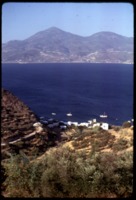
The island of Melos was an important Dorian colony and one of the islands which compose the Cycladic arc of volcanoes. Melos was a major exporter of stone. Their natural resources were highly coveted. When Athens invaded Melos during the Peloponnesian war they set up 500 lots for living, likely looking to take advantage of the aforementioned stone resources.
-
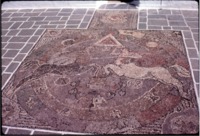
Mosaics came into fruition at the end of the 5th century BCE in Corinth. The practice spread quickly throughout the fourth century BCE as a way of decorating floors with a composition that could serve a didactic purpose as well as aesthetic. At its inception, artists used limited palettes of white, black, and red to orchestrate their compositions. Before the use of square stones called tesserae, artists struggled to ascribe their figures with a sense of verisimilitude or three-dimensionality.
-
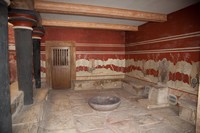
Shows a picture of the throne room at Knossos, in the background is the throne with the fresco of griffins and plants. Across from the throne room is a basin.
-
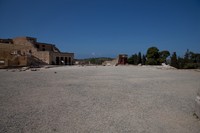
The image depicts the central courtyard at the Palace of Knossos. In the left corner, the entrance to the throne and bath room can be seen.
-
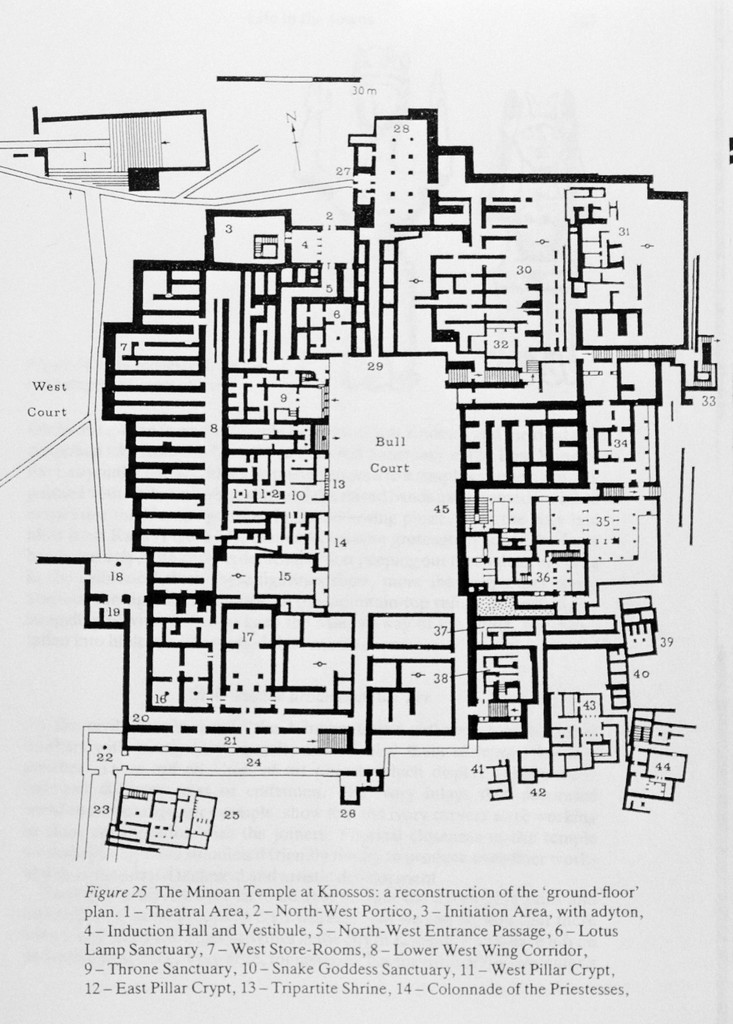
Plan of the Palace of Knossos
-
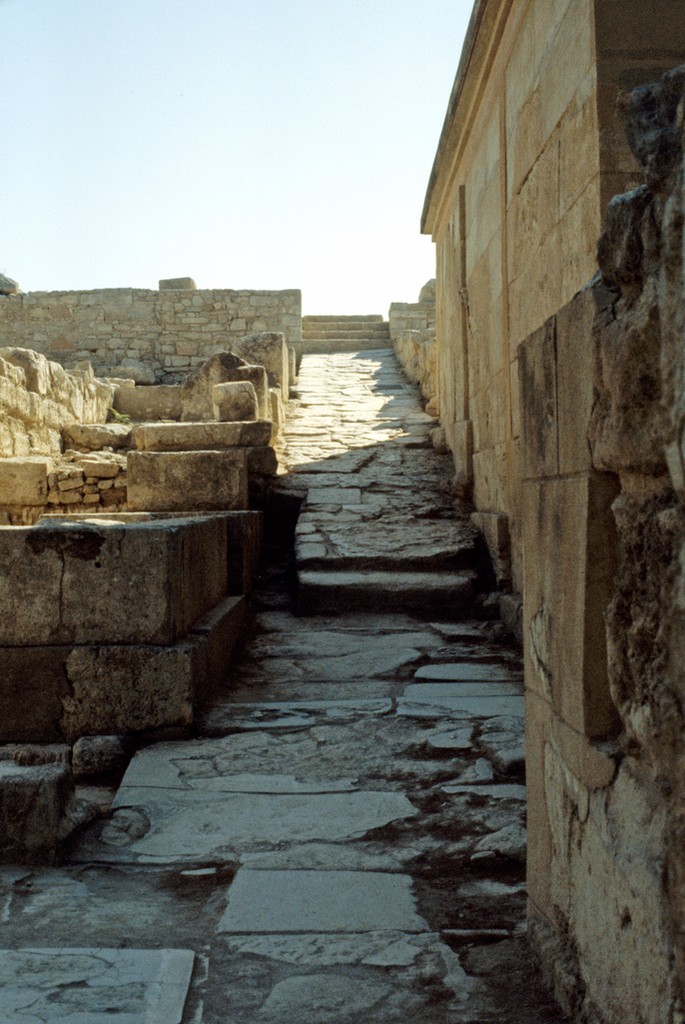
Image of the north entrance passageway from the Palace of Knossos. The image was taken facing away from the central court.
-